
Hex nuts, also known as hexagon nuts, are among the most commonly used fasteners in industrial, automotive, and construction applications. Their six-sided design allows easy tightening with standard tools while ensuring strong and reliable fastening. Available in various grades, sizes, and coatings, hex nuts provide durability, strength, and resistance to corrosion. They are manufactured according to international standards such as IS, DIN, and ISO. Companies like New Star Industries produce high-quality hex nuts that meet strict quality requirements, making them suitable for both standard and heavy-duty applications.
Hex nuts, often referred to as hexagon nuts, are threaded fasteners designed to be used with bolts or screws to join two or more components securely. Their defining feature is their six-sided shape, which allows them to be easily tightened or loosened using tools such as spanners or wrenches.
These nuts work by creating a clamping force when tightened onto a bolt. This force holds the connected parts together and prevents movement under stress or vibration. Because of their simple yet effective design, hex nuts have become a standard fastening solution across industries worldwide.
Hex nuts are preferred across industries because of their efficiency, reliability, and ease of use. The six-sided structure provides better grip and torque control, making installation quicker and more precise. This is especially important in large-scale manufacturing and assembly operations where time and accuracy are critical.
Another reason for their popularity is their compatibility with standard tools and bolts. Unlike specialized fasteners, hex nuts do not require unique equipment, which reduces costs and simplifies maintenance. Additionally, they are available in a wide range of materials, grades, and coatings, making them suitable for both light-duty and heavy-duty applications.
Hex nuts are available in multiple types, each designed for specific applications. Standard hex nuts are used in general-purpose fastening where moderate strength is sufficient. For more demanding applications, high tensile hex nuts are used because they can withstand higher loads and stress.
Heavy hex nuts are thicker and larger, making them ideal for structural applications such as bridges and heavy machinery. Lock nuts are designed to resist loosening caused by vibrations, which is crucial in automotive and industrial environments. Flange hex nuts, on the other hand, come with a built-in washer-like base that helps distribute the load evenly and reduces damage to the surface.
The performance of hex nuts largely depends on the material used in their manufacturing. Carbon steel is the most commonly used material due to its strength and affordability. Stainless steel is preferred in environments where corrosion resistance is essential, such as marine or outdoor applications.
Alloy steel is used for high-strength applications where durability is critical. In some specialized cases, brass hex nuts are used, particularly in electrical applications, because of their conductivity and resistance to corrosion.
Hex nuts are categorized into different grades based on their strength and load-bearing capacity. Lower grades such as 4.6, 5.6, and 6.8 are suitable for light to medium applications. These are commonly used in furniture, light machinery, and general construction.
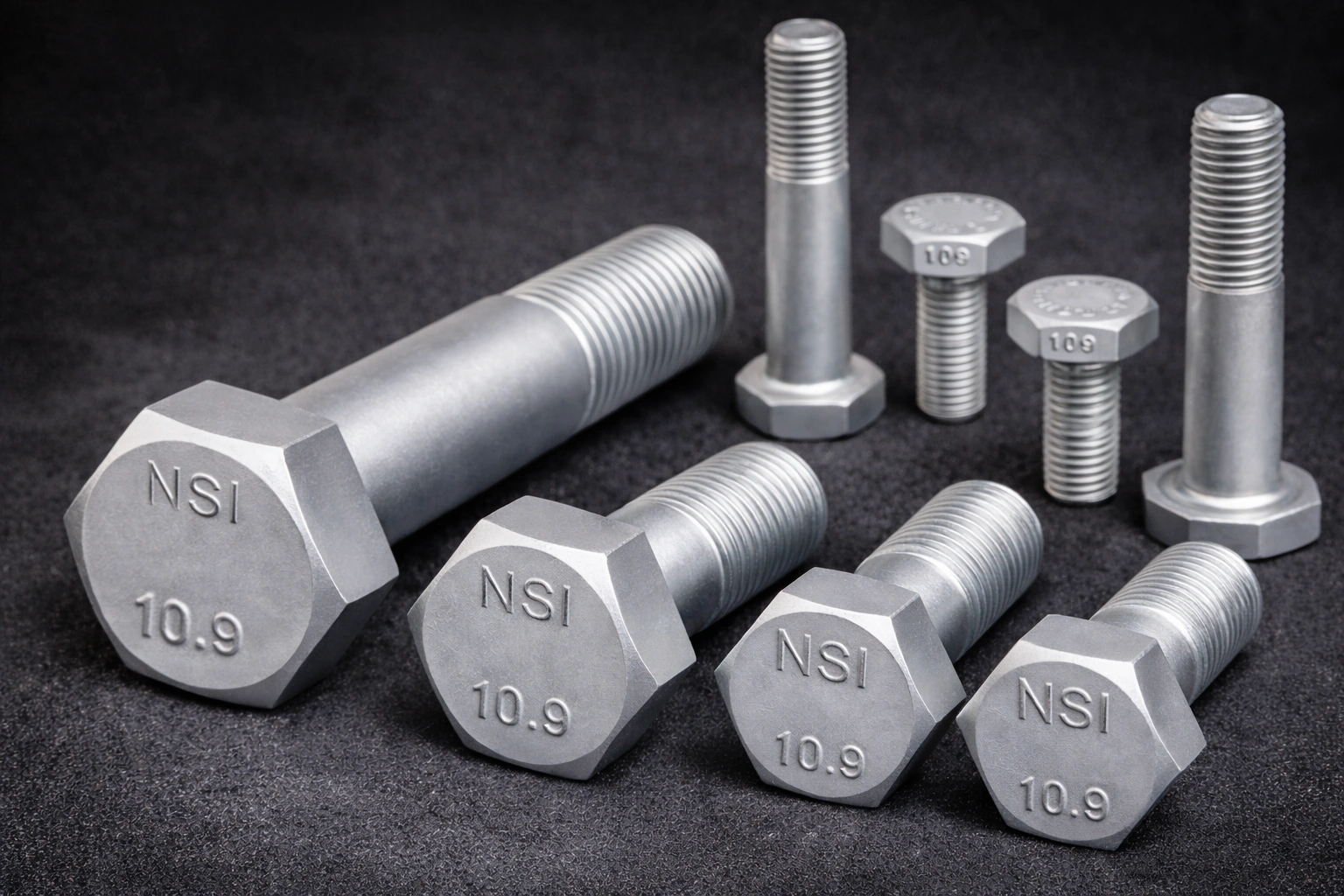
Grade 8.8 hex nuts are widely used in automotive applications due to their balance of strength and cost. For heavy-duty and high-stress applications, grades 10.9 and 12.9 are preferred. These high tensile hex nuts are capable of handling extreme loads and are commonly used in industrial machinery and infrastructure projects.
To enhance durability and protect against environmental damage, hex nuts are often coated with protective finishes. Zinc phosphate coating improves corrosion resistance and provides a good base for additional coatings. Manganese phosphate enhances wear resistance, making it suitable for moving parts.
Zinc electroplating is commonly used to provide a smooth finish and protect against rust. For highly corrosive environments, ZAC (Zinc Aluminium Flake Coating) is used, offering superior protection and longer service life. These coatings ensure that hex nuts maintain their performance even in challenging conditions.
Hex nuts are used in a wide variety of industries due to their versatility and reliability. In the automotive sector, they are used in engines, suspension systems, and structural components where secure fastening is critical.
In construction, hex nuts play a key role in building frameworks, bridges, and heavy structures. They are also widely used in industrial machinery, where they help assemble and secure complex equipment. Infrastructure projects such as highways and railways also rely heavily on high-quality hex nuts for safety and durability.
To ensure consistency, safety, and compatibility, hex nuts are manufactured according to established international standards. Indian Standards such as IS 1363 and IS 1364 define dimensions and mechanical properties. Similarly, DIN standards like DIN 931, DIN 933, and DIN 934 are widely followed in global markets.
ISO standards, such as ISO 4032, further ensure that hex nuts meet international quality benchmarks. These standards make it easier for engineers and manufacturers to select the right fasteners for their applications without compatibility issues.
New Star Industries is a trusted Hex Nuts Manufacturer in India, offering a wide range of hexagon nuts designed for industrial and automotive applications. Their products are manufactured using advanced technology and strict quality control processes to ensure reliability and performance.
| Parameter | Metric Range | Inches Range |
|---|---|---|
| Diameter | M6 to M64 | 1/4″ – 2.5″ |
| Length | 12 MM – 500 MM | Up to 20 Inch |
| Grades | 4.6, 5.6, 6.8, 8.8, 10.9, 12.9 | - |
| Standards | IS 1363, IS 1364 | - |
| DIN Standards | DIN 931, DIN 933 | - |
With over 60 years of experience and advanced manufacturing capabilities, New Star Industries delivers high-quality fasteners for diverse industries.
Hex nuts are known by various names depending on standards and usage. These include hexagon nuts, standard nuts, high tensile hex nuts, DIN 934 nuts, ISO 4032 nuts, and IS 1364 nuts. Understanding these terms helps buyers and engineers identify the correct product for their specific requirements.
Choosing the right hex nut involves understanding the application, load requirements, and environmental conditions. For light-duty applications, lower-grade nuts may be sufficient, while heavy-duty applications require high tensile grades such as 10.9 or 12.9.
Environmental factors also play a crucial role. In corrosive environments, coated or stainless steel nuts are recommended. It is also important to ensure compatibility with the bolt and adherence to international standards for optimal performance and safety.
Hex nuts are used to fasten components together with bolts in construction, automotive, and industrial applications.
Yes, both terms refer to the same six-sided threaded fastener.
The best grade depends on the application, but grade 12.9 is ideal for high-strength requirements.
The six-sided design allows easy tool access and better torque control.
Hex nuts are a fundamental component in fastening systems, offering strength, versatility, and ease of use. Their wide range of sizes, grades, and coatings makes them suitable for almost every industry, from automotive to infrastructure.
Choosing a reliable manufacturer is essential to ensure quality and performance. New Star Industries, with its decades of experience and commitment to excellence, stands out as a leading manufacturer of hex nuts in India. By providing products that meet global standards and customer-specific requirements, the company continues to support industries with dependable fastening solutions.
Vikram Bhamra – CEO, New Star Industries
Vikram Bhamra is the CEO of New Star Industries, a third-generation manufacturing company specializing in high-performance fasteners for automotive, infrastructure, and heavy engineering applications. After graduating in Business Management from Canada in 2010, he returned to India in 2011 to lead and modernize the family enterprise. With 14+ years of hands-on experience, he has driven advancements in cold forging, zinc flake coating, and precision heat treatment. In 2024, he founded New Star AutoComp, expanding cold forged fasteners into automotive OEMs, railway bridges, PEB, and heavy engineering sectors with globally compliant fastening solutions.